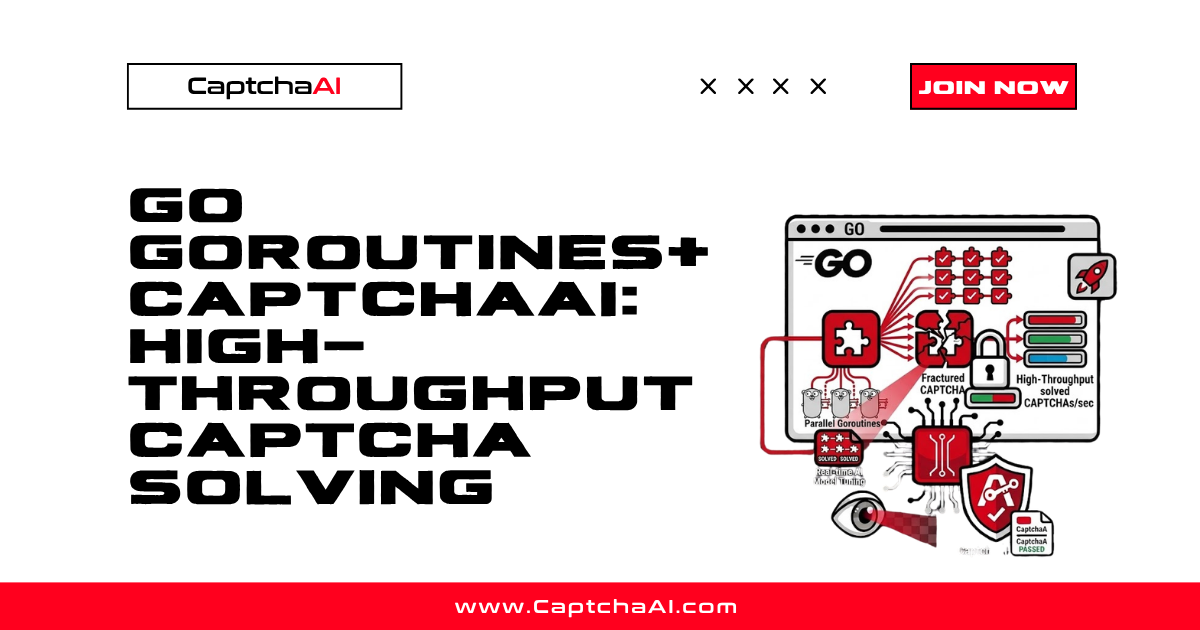
Go's strong typing, built-in concurrency, and single-binary deployment make it a solid choice for automation systems. This guide builds a CaptchaAI client library that follows Go conventions — context.Context support, custom http.Client injection, and typed error values.
Package Structure
captchaai/
├── client.go       # Main client and solve logic
├── errors.go       # Error types
├── types.go        # Request/response structs
└── client_test.go  # Tests
Error Types
// errors.go
package captchaai

import "fmt"

// APIError represents a CaptchaAI API error response.
type APIError struct {
    Code    string
    Message string
}

func (e *APIError) Error() string {
    return fmt.Sprintf("captchaai: %s (%s)", e.Message, e.Code)
}

// IsFatal returns true if this error should not be retried.
func (e *APIError) IsFatal() bool {
    switch e.Code {
    case "ERROR_WRONG_USER_KEY", "ERROR_KEY_DOES_NOT_EXIST",
        "ERROR_ZERO_BALANCE", "ERROR_IP_NOT_ALLOWED":
        return true
    }
    return false
}

// TimeoutError indicates the solve exceeded the configured timeout.
type TimeoutError struct {
    TaskID string
}

func (e *TimeoutError) Error() string {
    return fmt.Sprintf("captchaai: task %s timed out", e.TaskID)
}
Types
// types.go
package captchaai

import "time"

// ClientOption configures the CaptchaAI client.
type ClientOption func(*Client)

// WithPollInterval sets the polling interval between result checks.
func WithPollInterval(d time.Duration) ClientOption {
    return func(c *Client) { c.pollInterval = d }
}

// WithTimeout sets the maximum time to wait for a solution.
func WithTimeout(d time.Duration) ClientOption {
    return func(c *Client) { c.timeout = d }
}

// RecaptchaV2Params holds parameters for reCAPTCHA v2 solving.
type RecaptchaV2Params struct {
    SiteKey   string
    PageURL   string
    Invisible bool
    Cookies   string
}

// RecaptchaV3Params holds parameters for reCAPTCHA v3 solving.
type RecaptchaV3Params struct {
    SiteKey  string
    PageURL  string
    Action   string
}

// TurnstileParams holds parameters for Cloudflare Turnstile solving.
type TurnstileParams struct {
    SiteKey string
    PageURL string
    Action  string
    CData   string
}

// ImageParams holds parameters for image/OCR CAPTCHA solving.
type ImageParams struct {
    Base64Image   string
    CaseSensitive bool
    MinLength     int
    MaxLength     int
}

type submitResponse struct {
    Status  int    `json:"status"`
    Request string `json:"request"`
}

type pollResponse struct {
    Status  int    `json:"status"`
    Request string `json:"request"`
}
Client Implementation
// client.go
package captchaai

import (
    "context"
    "encoding/json"
    "fmt"
    "net/http"
    "net/url"
    "strconv"
    "time"
)

const (
    submitURL           = "https://ocr.captchaai.com/in.php"
    resultURL           = "https://ocr.captchaai.com/res.php"
    defaultPollInterval = 5 * time.Second
    defaultTimeout      = 180 * time.Second
)

// Client interacts with the CaptchaAI API.
type Client struct {
    apiKey       string
    httpClient   *http.Client
    pollInterval time.Duration
    timeout      time.Duration
}

// New creates a CaptchaAI client with the given API key and options.
func New(apiKey string, opts ...ClientOption) *Client {
    c := &Client{
        apiKey:       apiKey,
        httpClient:   http.DefaultClient,
        pollInterval: defaultPollInterval,
        timeout:      defaultTimeout,
    }
    for _, opt := range opts {
        opt(c)
    }
    return c
}

// WithHTTPClient sets a custom HTTP client (e.g., for proxy support).
func WithHTTPClient(hc *http.Client) ClientOption {
    return func(c *Client) { c.httpClient = hc }
}

func (c *Client) submit(ctx context.Context, params url.Values) (string, error) {
    params.Set("key", c.apiKey)
    params.Set("json", "1")

    req, err := http.NewRequestWithContext(ctx, http.MethodPost, submitURL, nil)
    if err != nil {
        return "", fmt.Errorf("captchaai: build request: %w", err)
    }
    req.URL.RawQuery = params.Encode()

    resp, err := c.httpClient.Do(req)
    if err != nil {
        return "", fmt.Errorf("captchaai: submit: %w", err)
    }
    defer resp.Body.Close()

    var result submitResponse
    if err := json.NewDecoder(resp.Body).Decode(&result); err != nil {
        return "", fmt.Errorf("captchaai: decode submit response: %w", err)
    }

    if result.Status != 1 {
        return "", &APIError{Code: result.Request, Message: "submit failed"}
    }

    return result.Request, nil
}

func (c *Client) poll(ctx context.Context, taskID string) (string, error) {
    deadline := time.After(c.timeout)

    for {
        select {
        case <-ctx.Done():
            return "", ctx.Err()
        case <-deadline:
            return "", &TimeoutError{TaskID: taskID}
        case <-time.After(c.pollInterval):
        }

        params := url.Values{
            "key":    {c.apiKey},
            "action": {"get"},
            "id":     {taskID},
            "json":   {"1"},
        }

        req, err := http.NewRequestWithContext(ctx, http.MethodGet, resultURL+"?"+params.Encode(), nil)
        if err != nil {
            return "", fmt.Errorf("captchaai: build poll request: %w", err)
        }

        resp, err := c.httpClient.Do(req)
        if err != nil {
            continue // Retry on network error
        }

        var result pollResponse
        if err := json.NewDecoder(resp.Body).Decode(&result); err != nil {
            resp.Body.Close()
            continue
        }
        resp.Body.Close()

        if result.Request == "CAPCHA_NOT_READY" {
            continue
        }

        if result.Status == 1 {
            return result.Request, nil
        }

        return "", &APIError{Code: result.Request, Message: "solve failed"}
    }
}

// SolveRecaptchaV2 solves a reCAPTCHA v2 challenge.
func (c *Client) SolveRecaptchaV2(ctx context.Context, p RecaptchaV2Params) (string, error) {
    params := url.Values{
        "method":    {"userrecaptcha"},
        "googlekey": {p.SiteKey},
        "pageurl":   {p.PageURL},
    }
    if p.Invisible {
        params.Set("invisible", "1")
    }
    if p.Cookies != "" {
        params.Set("cookies", p.Cookies)
    }

    taskID, err := c.submit(ctx, params)
    if err != nil {
        return "", err
    }
    return c.poll(ctx, taskID)
}

// SolveRecaptchaV3 solves a reCAPTCHA v3 challenge.
func (c *Client) SolveRecaptchaV3(ctx context.Context, p RecaptchaV3Params) (string, error) {
    params := url.Values{
        "method":    {"userrecaptcha"},
        "version":   {"v3"},
        "googlekey": {p.SiteKey},
        "pageurl":   {p.PageURL},
    }
    if p.Action != "" {
        params.Set("action", p.Action)
    }

    taskID, err := c.submit(ctx, params)
    if err != nil {
        return "", err
    }
    return c.poll(ctx, taskID)
}

// SolveTurnstile solves a Cloudflare Turnstile challenge.
func (c *Client) SolveTurnstile(ctx context.Context, p TurnstileParams) (string, error) {
    params := url.Values{
        "method":  {"turnstile"},
        "sitekey": {p.SiteKey},
        "pageurl": {p.PageURL},
    }
    if p.Action != "" {
        params.Set("action", p.Action)
    }
    if p.CData != "" {
        params.Set("data", p.CData)
    }

    taskID, err := c.submit(ctx, params)
    if err != nil {
        return "", err
    }
    return c.poll(ctx, taskID)
}

// SolveImage solves an image/text CAPTCHA from base64.
func (c *Client) SolveImage(ctx context.Context, p ImageParams) (string, error) {
    params := url.Values{
        "method": {"base64"},
        "body":   {p.Base64Image},
    }
    if p.CaseSensitive {
        params.Set("regsense", "1")
    }
    if p.MinLength > 0 {
        params.Set("min_len", strconv.Itoa(p.MinLength))
    }
    if p.MaxLength > 0 {
        params.Set("max_len", strconv.Itoa(p.MaxLength))
    }

    taskID, err := c.submit(ctx, params)
    if err != nil {
        return "", err
    }
    return c.poll(ctx, taskID)
}

// GetBalance returns the current account balance.
func (c *Client) GetBalance(ctx context.Context) (float64, error) {
    params := url.Values{
        "key":    {c.apiKey},
        "action": {"getbalance"},
        "json":   {"1"},
    }

    req, err := http.NewRequestWithContext(ctx, http.MethodGet, resultURL+"?"+params.Encode(), nil)
    if err != nil {
        return 0, err
    }

    resp, err := c.httpClient.Do(req)
    if err != nil {
        return 0, err
    }
    defer resp.Body.Close()

    var result pollResponse
    if err := json.NewDecoder(resp.Body).Decode(&result); err != nil {
        return 0, err
    }

    return strconv.ParseFloat(result.Request, 64)
}
Usage
package main

import (
    "context"
    "fmt"
    "log"
    "time"

    "your-module/captchaai"
)

func main() {
    client := captchaai.New("YOUR_API_KEY",
        captchaai.WithTimeout(120*time.Second),
        captchaai.WithPollInterval(5*time.Second),
    )

    ctx := context.Background()

    // Check balance
    balance, err := client.GetBalance(ctx)
    if err != nil {
        log.Fatal(err)
    }
    fmt.Printf("Balance: $%.2f\n", balance)

    // Solve reCAPTCHA v2
    token, err := client.SolveRecaptchaV2(ctx, captchaai.RecaptchaV2Params{
        SiteKey: "6Le-wvkSAAAAAPBMRTvw0Q4Muexq9bi0DJwx_mJ-",
        PageURL: "https://example.com/login",
    })
    if err != nil {
        var apiErr *captchaai.APIError
        if errors.As(err, &apiErr) && apiErr.IsFatal() {
            log.Fatalf("Fatal API error: %s", apiErr.Code)
        }
        log.Fatal(err)
    }
    fmt.Printf("Token: %s...\n", token[:40])

    // Solve with context timeout
    solveCtx, cancel := context.WithTimeout(ctx, 60*time.Second)
    defer cancel()

    turnstileToken, err := client.SolveTurnstile(solveCtx, captchaai.TurnstileParams{
        SiteKey: "0x4AAAAAAADnPIDROrmt1Wwj",
        PageURL: "https://example.com/checkout",
    })
    if err != nil {
        log.Fatal(err)
    }
    fmt.Printf("Turnstile: %s...\n", turnstileToken[:40])
}
Troubleshooting
| Issue | Cause | Fix |
|---|---|---|
context deadline exceeded |
Solve took longer than context timeout | Use longer context timeout or increase client WithTimeout |
captchaai: submit failed (ERROR_ZERO_BALANCE) |
No funds | Top up at CaptchaAI dashboard |
| Polls never complete | Network issues or wrong API URL | Check connectivity; verify URL constants |
Compiler error on errors.As |
Missing import | Add "errors" to imports |
| Custom HTTP client not used | Forgot WithHTTPClient option |
Pass option in New(): captchaai.New(key, captchaai.WithHTTPClient(myClient)) |
FAQ
Why use context.Context instead of a simple timeout?
Context integrates with Go's standard cancellation pattern. If the parent HTTP handler or goroutine is cancelled, the CAPTCHA solve stops immediately — no orphaned polling loops consuming API credits.
How do I use this with a proxy?
Inject a custom http.Client with a proxy transport. This routes all SDK traffic through your proxy without modifying the library.
Should I use go install or vendoring?
For private projects, use go mod vendor. For reusable libraries, publish as a Go module with semantic versioning and let consumers import with go get.
Related Articles
- Captchaai Ip Whitelisting Api Key Security
- Captchaai Api Key Rotation
- Captchaai Api Endpoint Mapping Competitors
Next Steps
Build your Go CAPTCHA client — get your CaptchaAI API key and start with the package above.
Related guides: