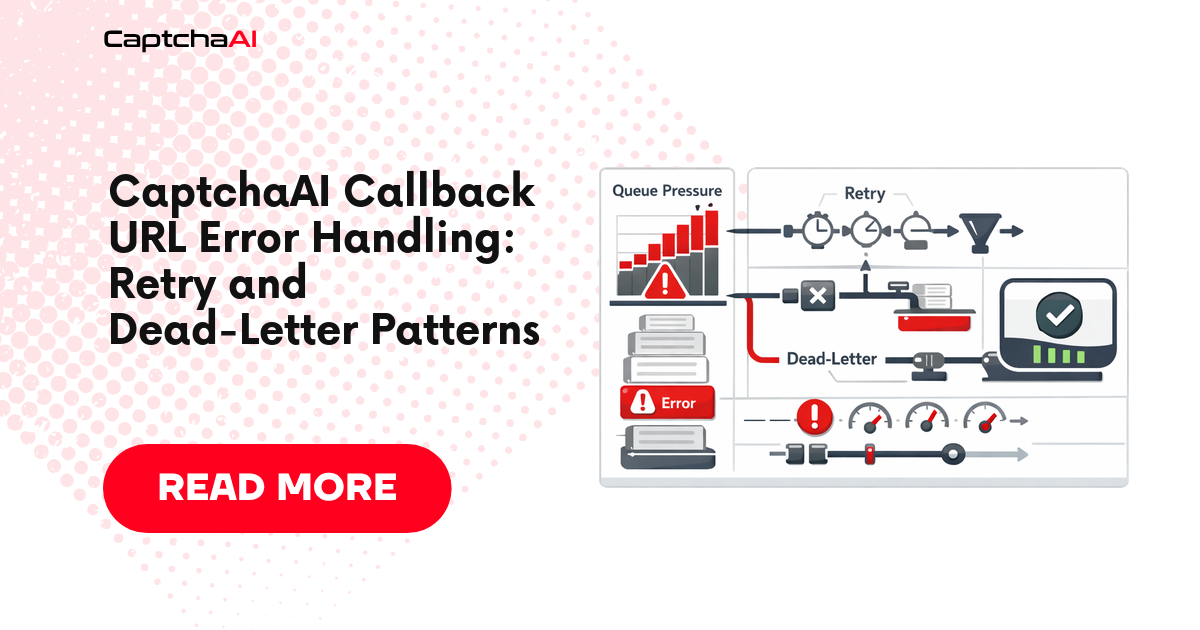
Callbacks (pingbacks) eliminate polling, but they introduce a new failure mode: what happens when your server is down, returns an error, or times out when CaptchaAI tries to deliver the result? This tutorial covers patterns for handling callback failures without losing CAPTCHA solutions.
What Can Go Wrong
| Failure Mode | Symptom | Result |
|---|---|---|
| Server down | CaptchaAI gets connection refused | Solution not delivered |
| Server returns 5xx | CaptchaAI receives error response | May not retry (depends on implementation) |
| Network timeout | CaptchaAI connection hangs | Solution potentially lost |
| Handler crashes | Request accepted but result not stored | Solution silently dropped |
The solution: never rely solely on callbacks. Always have a fallback.
Pattern 1: Callback + Fallback Polling
The most reliable approach — accept callbacks when they arrive, but poll for any tasks that don't receive callbacks within a timeout.
Python
import os
import time
import threading
import requests
from flask import Flask, request

app = Flask(__name__)
API_KEY = os.environ["CAPTCHAAI_API_KEY"]

# Track task state
pending_tasks = {}  # task_id -> {"submitted_at": timestamp, "status": "pending"}
results = {}
lock = threading.Lock()


def submit_captcha(sitekey, pageurl, callback_url):
    """Submit with callback, but track for fallback polling."""
    resp = requests.post("https://ocr.captchaai.com/in.php", data={
        "key": API_KEY,
        "method": "userrecaptcha",
        "googlekey": sitekey,
        "pageurl": pageurl,
        "pingback": callback_url,
        "json": 1
    })
    data = resp.json()

    if data.get("status") == 1:
        task_id = data["request"]
        with lock:
            pending_tasks[task_id] = {
                "submitted_at": time.time(),
                "status": "pending"
            }
        return task_id
    return None


@app.route("/callback")
def captcha_callback():
    """Primary result delivery — CaptchaAI sends results here."""
    task_id = request.args.get("id")
    solution = request.args.get("code")

    with lock:
        results[task_id] = solution
        pending_tasks.pop(task_id, None)

    return "OK", 200


def fallback_poller():
    """Poll for any tasks that missed their callback."""
    while True:
        time.sleep(30)  # Check every 30 seconds

        with lock:
            stale_tasks = [
                tid for tid, info in pending_tasks.items()
                if time.time() - info["submitted_at"] > 120  # 2 min callback timeout
                and info["status"] == "pending"
            ]

        for task_id in stale_tasks:
            resp = requests.get("https://ocr.captchaai.com/res.php", params={
                "key": API_KEY,
                "action": "get",
                "id": task_id,
                "json": 1
            })
            data = resp.json()

            if data.get("status") == 1:
                with lock:
                    results[task_id] = data["request"]
                    pending_tasks.pop(task_id, None)
                print(f"Fallback poll recovered: {task_id}")
            elif data.get("request") != "CAPCHA_NOT_READY":
                # Permanent error — remove from pending
                with lock:
                    pending_tasks.pop(task_id, None)
                print(f"Task failed: {task_id} — {data.get('request')}")


# Start fallback poller in background
poller_thread = threading.Thread(target=fallback_poller, daemon=True)
poller_thread.start()
JavaScript
const express = require("express");
const axios = require("axios");

const app = express();
const API_KEY = process.env.CAPTCHAAI_API_KEY;

const pendingTasks = new Map(); // taskId -> { submittedAt, status }
const results = new Map();

async function submitCaptcha(sitekey, pageurl, callbackUrl) {
  const resp = await axios.post("https://ocr.captchaai.com/in.php", null, {
    params: {
      key: API_KEY,
      method: "userrecaptcha",
      googlekey: sitekey,
      pageurl: pageurl,
      pingback: callbackUrl,
      json: 1,
    },
  });

  if (resp.data.status === 1) {
    const taskId = resp.data.request;
    pendingTasks.set(taskId, {
      submittedAt: Date.now(),
      status: "pending",
    });
    return taskId;
  }
  return null;
}

// Primary callback endpoint
app.get("/callback", (req, res) => {
  const taskId = req.query.id;
  const solution = req.query.code;

  results.set(taskId, solution);
  pendingTasks.delete(taskId);

  res.sendStatus(200);
});

// Fallback poller
setInterval(async () => {
  const now = Date.now();
  const staleTasks = [];

  for (const [taskId, info] of pendingTasks) {
    if (now - info.submittedAt > 120000 && info.status === "pending") {
      staleTasks.push(taskId);
    }
  }

  for (const taskId of staleTasks) {
    try {
      const resp = await axios.get("https://ocr.captchaai.com/res.php", {
        params: { key: API_KEY, action: "get", id: taskId, json: 1 },
      });

      if (resp.data.status === 1) {
        results.set(taskId, resp.data.request);
        pendingTasks.delete(taskId);
        console.log(`Fallback recovered: ${taskId}`);
      } else if (resp.data.request !== "CAPCHA_NOT_READY") {
        pendingTasks.delete(taskId);
        console.log(`Task failed: ${taskId} — ${resp.data.request}`);
      }
    } catch (err) {
      console.error(`Poll error for ${taskId}: ${err.message}`);
    }
  }
}, 30000);

app.listen(3000);
Pattern 2: Dead-Letter Queue
When your callback handler processes a result but encounters an error (database down, validation failure), move the problem to a dead-letter queue instead of losing the data.
Python
import json
import os
import time
from pathlib import Path

DEAD_LETTER_DIR = Path("dead_letter")
DEAD_LETTER_DIR.mkdir(exist_ok=True)


@app.route("/callback")
def captcha_callback_with_dlq():
    task_id = request.args.get("id")
    solution = request.args.get("code")

    try:
        # Attempt normal processing
        store_result(task_id, solution)
        return "OK", 200
    except Exception as e:
        # Processing failed — save to dead-letter queue
        dead_letter = {
            "task_id": task_id,
            "solution": solution,
            "error": str(e),
            "received_at": time.time()
        }
        dlq_path = DEAD_LETTER_DIR / f"{task_id}.json"
        dlq_path.write_text(json.dumps(dead_letter))

        print(f"DLQ: {task_id} — {e}")
        return "OK", 200  # Still return 200 to CaptchaAI


def reprocess_dead_letters():
    """Retry processing dead-letter items."""
    for dlq_file in DEAD_LETTER_DIR.glob("*.json"):
        item = json.loads(dlq_file.read_text())

        try:
            store_result(item["task_id"], item["solution"])
            dlq_file.unlink()  # Remove after successful processing
            print(f"DLQ reprocessed: {item['task_id']}")
        except Exception:
            pass  # Leave in DLQ for next retry
JavaScript
const fs = require("fs");
const path = require("path");

const DLQ_DIR = path.join(__dirname, "dead_letter");
if (!fs.existsSync(DLQ_DIR)) fs.mkdirSync(DLQ_DIR);

app.get("/callback-dlq", (req, res) => {
  const taskId = req.query.id;
  const solution = req.query.code;

  try {
    storeResult(taskId, solution);
    res.sendStatus(200);
  } catch (err) {
    // Save to dead-letter queue
    const deadLetter = {
      task_id: taskId,
      solution: solution,
      error: err.message,
      received_at: Date.now(),
    };

    fs.writeFileSync(
      path.join(DLQ_DIR, `${taskId}.json`),
      JSON.stringify(deadLetter)
    );

    console.log(`DLQ: ${taskId} — ${err.message}`);
    res.sendStatus(200); // Still acknowledge to CaptchaAI
  }
});

function reprocessDeadLetters() {
  const files = fs.readdirSync(DLQ_DIR).filter((f) => f.endsWith(".json"));

  for (const file of files) {
    const filePath = path.join(DLQ_DIR, file);
    const item = JSON.parse(fs.readFileSync(filePath, "utf8"));

    try {
      storeResult(item.task_id, item.solution);
      fs.unlinkSync(filePath);
      console.log(`DLQ reprocessed: ${item.task_id}`);
    } catch (err) {
      // Leave in DLQ
    }
  }
}

// Retry DLQ every 5 minutes
setInterval(reprocessDeadLetters, 300000);
Pattern 3: Idempotent Callback Handler
Callbacks might be delivered more than once. Make your handler idempotent:
@app.route("/callback")
def idempotent_callback():
    task_id = request.args.get("id")
    solution = request.args.get("code")

    with lock:
        # Only process if not already handled
        if task_id in results:
            return "OK", 200  # Already processed — skip silently

        results[task_id] = solution
        pending_tasks.pop(task_id, None)

    return "OK", 200
Decision Matrix: Which Pattern to Use
| Scenario | Best Pattern |
|---|---|
| Low volume, occasional downtime | Callback + Fallback Polling |
| High volume, database outages possible | Dead-Letter Queue |
| Multiple consumers might process same result | Idempotent Handler |
| Production system with SLAs | All three combined |
Troubleshooting
| Issue | Cause | Fix |
|---|---|---|
| Fallback poller finds tasks that were already delivered | Race between callback and poller | Add idempotency check — skip if already in results |
| DLQ growing without being processed | Reprocessor not running or failing | Check reprocessor logs; ensure underlying issue (DB) is fixed |
| Callback returns 200 but result is lost | Handler crashes after response is sent | Process before responding, or use DLQ pattern |
| Too many fallback poll requests | Too many stale tasks | Increase callback timeout threshold; check server uptime |
FAQ
Should I always return 200 to CaptchaAI callbacks?
Yes. Returning an error code (4xx/5xx) doesn't help — CaptchaAI may not retry callbacks. Always accept the delivery (200 OK) and handle failures internally with DLQ or fallback polling.
How long should I wait before fallback polling?
Wait at least 120 seconds after submission. Most CAPTCHAs solve within 10–60 seconds, plus network latency for the callback delivery. Two minutes gives ample time for the callback to arrive.
Can I disable callbacks and just poll?
Yes — simply don't include the pingback parameter. But callbacks reduce API calls significantly at scale (2 calls per task instead of 10+ poll requests).
Related Articles
- Python Captcha Solving Retry Error Patterns
- Captchaai Webhook Security Callback Validation
- Captchaai Error Codes Reference
Next Steps
Build reliable CAPTCHA callback handling — get your CaptchaAI API key and implement these resilience patterns.
Related guides:
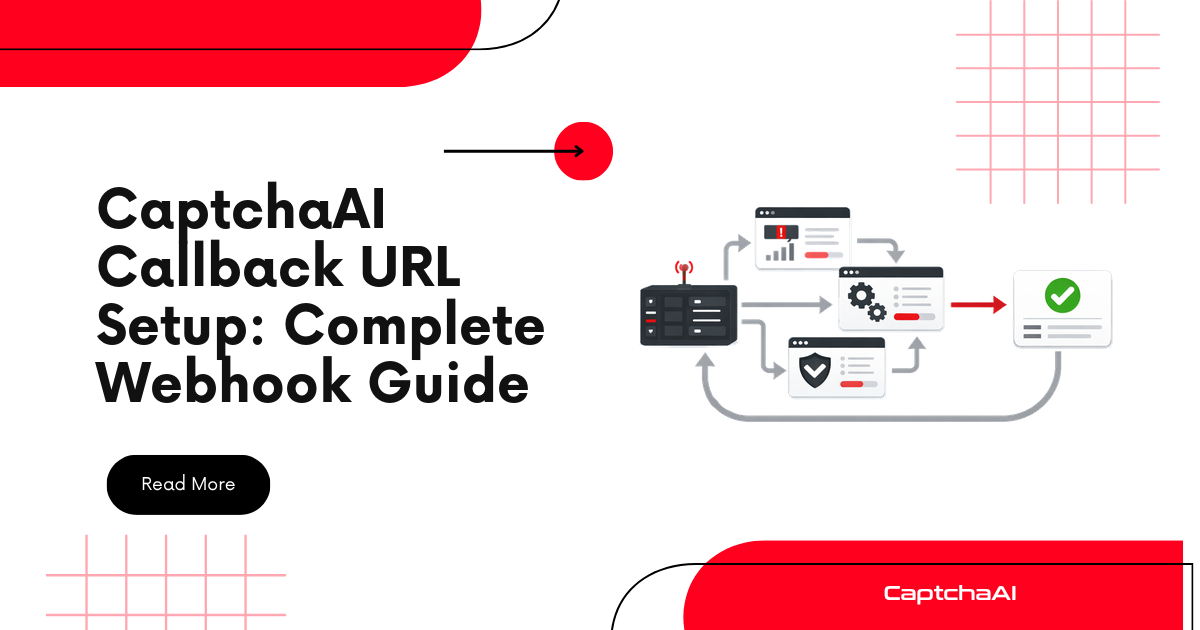
- Callback URL and Webhook Guide
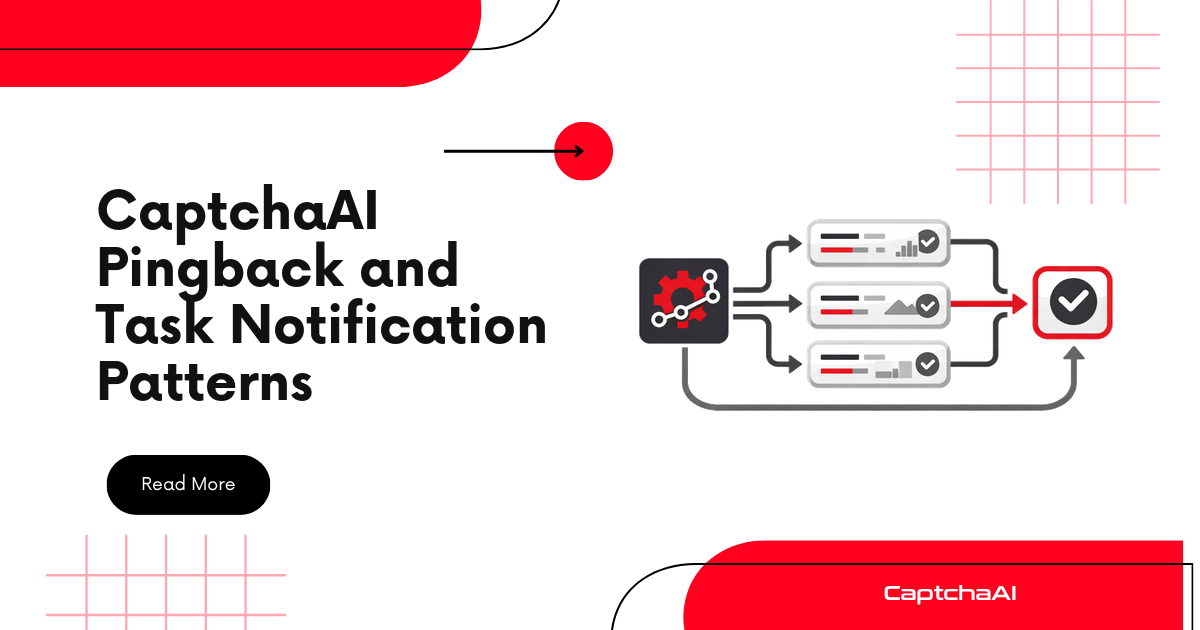
- Pingback Task Notification Patterns
- Webhook Security: Validating Callbacks
Full Working Code
Complete runnable examples for this article in Python, Node.js, PHP, Go, Java, C#, Ruby, Rust, Kotlin & Bash.
View on GitHub →
Discussions (0)
Join the conversation
Sign in to share your opinion.
Sign InNo comments yet.