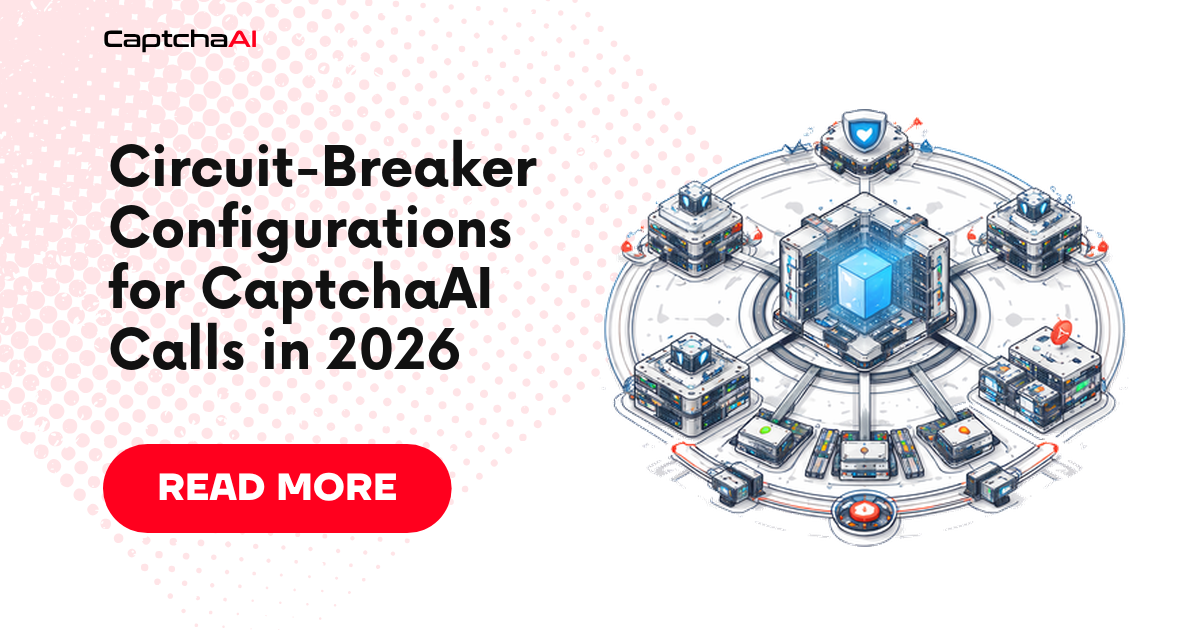
If you're a automation developer working on Circuit-Breaker Configurations for CaptchaAI Calls in 2026, this guide is written for you. You're building or maintaining automated flows that touch a form, login, or workflow protected by a CAPTCHA. The system needs to keep running unattended in CI, in cron jobs, or behind an internal queue. The goal here is simple: have a reference you can quote in code review for Circuit-Breaker Configurations for CaptchaAI Calls in 2026, with the kind of structure that holds up in production rather than only on a happy-path demo.
Why this matters
Teams reach this topic when circuit-breaker configurations for captchaai calls in 2026 starts to look deceptively simple in a notebook and then breaks the moment it runs unattended. What you actually need is predictable solve latency, clean failure modes, and code that another developer can read in five minutes. CaptchaAI is built around that need: one consistent API across the all types families you care about, predictable latency, and a pricing model that doesn't punish you for scaling.
Real-world scenario
Picture the version of circuit-breaker configurations for captchaai calls in 2026 that you actually run: a scheduled job, an internal worker pool, or a tested end-to-end flow that has to traverse a CAPTCHA-protected step in your own application. The first run works in five minutes. Then it has to keep working through deploy windows, network hiccups, and the occasional change in the CAPTCHA family on the page. The architecture below absorbs all three without hand-holding.
Recommended workflow
- Capture exactly what the solver needs. Inspect the live page or network call and pull only the parameters the CAPTCHA family expects (sitekey, page URL, action, optional proxy). Storing more than that creates false debugging paths later.
- Submit the task to
https://ocr.captchaai.com/in.phpwithjson=1. Treat any non-1status as an error, log the full response, and surface it to your monitoring channel. - Poll for the result at
https://ocr.captchaai.com/res.php. Wait 15 seconds before the first poll, then poll every 5 seconds with a hard cap of 120 seconds per task. - Apply the token in the same session that triggered the challenge — the same browser context, the same HTTP client, the same cookie jar. Mismatched sessions are the most common cause of post-solve rejection.
- Track latency, retries, and downstream acceptance. Solve success and workflow success are different metrics. Track both.
Operational checklist
Use the checklist below as a code-review aid before merging the integration. Each row maps to a real failure we've watched teams trip over.
| Check | Why it matters | Recommended setting |
|---|---|---|
| Exact request inputs | Wrong parameters create false debugging trails before you ever look at the solver. | Capture the live HTML and network calls, then assert the values your code sends match them. |
| Polling cadence | Over-polling adds load and noise; under-polling slows the workflow. | Wait 15s, then poll every 5s with a hard cap of 120 seconds per task. |
| Same-session handoff | Tokens and cookies often fail when applied in a different session than the one that triggered the challenge. | Apply the solve in the same browser context or HTTP session that continues the flow. |
| Retry budget | Infinite retries hide real defects and burn balance. | Cap at three attempts with exponential backoff and log every terminal failure. |
| Acceptance signal | A solved task is not the same as a successful workflow. | Track downstream HTTP status separately from solver success and alert on the gap. |
How to measure success
If you can't measure it, you can't defend it. Wire these KPIs into the same dashboard you already use for your application and you'll spot regressions long before users notice.
| KPI | Target | What it tells you |
|---|---|---|
| First-solve latency (p50) | < 25s for token CAPTCHAs, < 8s for image OCR | The integration is healthy and not waiting on retries. |
| First-solve latency (p95) | < 60s for token CAPTCHAs | The tail is contained and your timeouts are correctly sized. |
| Solver success rate | >= 95% per CAPTCHA family | Your inputs are correct and the solver is matching the live challenge. |
| End-to-end acceptance | >= 95% post-token | Downstream verification accepts the token in the same session you applied it. |
| Cost per accepted solve | Stable across the week | Volume is not eroding margins through retries or wrong-parameter loops. |
Safe scope
This guide assumes one of three setups: you own the application that renders the CAPTCHA, you operate it for a client who has authorized the integration, or you are running an authorized data-collection agreement with the source. CaptchaAI is engineered to make those setups predictable. Nothing in this article is a recipe for circumventing protections on third-party sites you have no agreement with — that's a different conversation, and not the one this article is here to help with.
Troubleshooting
The errors below cover roughly 90% of the support tickets we see for this integration. Each row is a one-line fix you can apply without leaving your editor.
| Symptom | Likely cause | Fix |
|---|---|---|
ERROR_WRONG_USER_KEY |
Key copied with stray whitespace or wrong account. | Re-copy the key from the dashboard and store it as a CI secret. |
ERROR_KEY_DOES_NOT_EXIST |
Wrong project key or the key was rotated. | Confirm the active key in the dashboard and roll the secret. |
ERROR_ZERO_BALANCE |
Account balance below the per-task minimum. | Top up before retrying; add a balance alert in your dashboard. |
ERROR_PAGEURL / ERROR_BAD_PARAMETERS |
Required input is missing or malformed. | Re-validate the page URL, sitekey, and solver-specific fields against the live HTML. |
ERROR_CAPTCHA_UNSOLVABLE |
The challenge could not be solved reliably. | Retry once; if it persists, capture the page HTML and open a support ticket. |
| Token rejected after solve | Token applied in a different session than the one that triggered the challenge. | Keep the solve and the form submission inside the same browser context or HTTP session. |
FAQ
Is CaptchaAI the right fit for circuit-breaker configurations for captchaai calls in 2026?
Yes — CaptchaAI's all types support, predictable latency, and stable pricing are exactly what this kind of workflow needs. The integration is small, observable, and easy to hand off.
How do I keep this stable in production?
Wire the KPIs above into your existing dashboards, cap retries at three with exponential backoff, and alert on the gap between solve success and downstream acceptance. Those three controls eliminate the majority of late-night pages.
What happens if the CAPTCHA family on the page changes?
CaptchaAI exposes a single API across CAPTCHA families. You swap the method (or task type), keep the same submit/poll loop, and ship. The cost line stays predictable because the billing model is per solve, not per integration.
How does this affect cost as we scale?
Volume scales linearly with successful solves. Wrong-parameter loops and retry storms are the main cost killers — both are addressed by the operational checklist above. Most teams see cost-per-accepted-solve drop within the first week of running the dashboard.
Related guides
- CaptchaAI Quickstart: Your First Solve in 5 Minutes
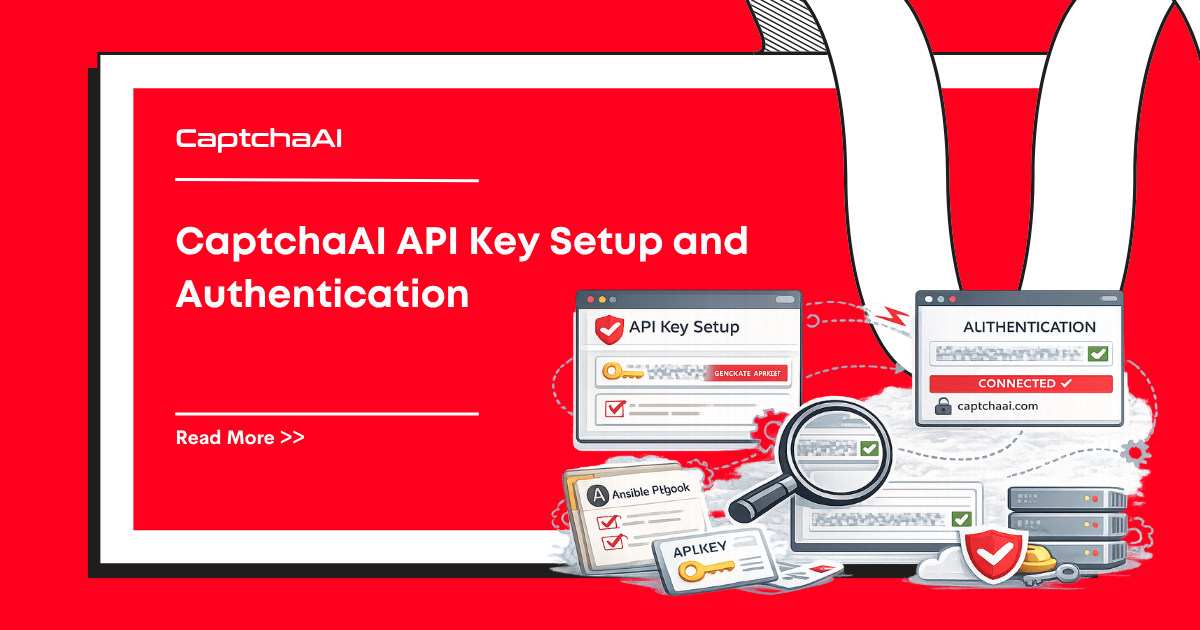
- CaptchaAI API Key Setup and Authentication
- How to Solve reCAPTCHA v2 Using API: Step-by-Step Guide
- How to Solve Cloudflare Turnstile Using API
Next step: Stop debugging CAPTCHA failures and let CaptchaAI handle them
Instrument the integration the way this guide describes, point your retries at the documented error codes, and the long tail of CAPTCHA tickets effectively disappears from your support queue.
Stop debugging CAPTCHA failures and let CaptchaAI handle them